Why Synthetic Acrylic Tennis Court Flooring Is the Best Choice?

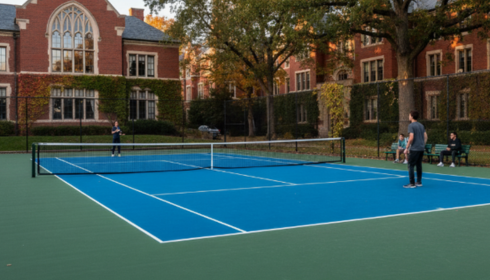
When players step onto a tennis court, they immediately feel the quality of the surface—its grip, bounce consistency, comfort underfoot, and overall playability. This is why tennis court flooring is not just a finishing layer but the foundation of performance, safety, and long-term durability. Over the years, synthetic acrylic systems have emerged as the most reliable and widely preferred solution for both professional and recreational tennis courts.
Today, academies, clubs, schools, and residential societies increasingly choose synthetic acrylic surfaces because they deliver the perfect balance between play quality, weather resistance, and cost efficiency.
Understanding Tennis Court Flooring and Surface Requirements
A tennis court surface must perform consistently across seasons and usage levels. The ideal tennis court surface material should provide:
- Uniform ball bounce
- Controlled slip resistance
- Shock absorption to reduce joint stress
- Resistance to heat, rain, and UV exposure
Synthetic acrylic flooring systems meet all these requirements while remaining adaptable to different playing speeds and usage intensities. Unlike clay or natural grass, acrylic courts require minimal daily maintenance and retain their performance characteristics for years.
Why Synthetic Acrylic Flooring Outperforms Other Tennis Court Materials
When comparing different tennis court material options, synthetic acrylic stands out for several practical reasons.
1. Consistent Playing Performance
Acrylic tennis courts offer predictable ball bounce and stable footing, which is critical for both training and competitive play. Players can trust the surface during fast rallies and lateral movements without unexpected slips.
2. Weather Resistance for Outdoor Courts
In countries with harsh summers and monsoon conditions, surface durability is non-negotiable. Synthetic acrylic flooring resists cracking, fading, and surface breakdown caused by temperature fluctuations and heavy rainfall, making it ideal for outdoor tennis court construction.
3. Lower Lifecycle Cost
While people often ask how much it costs to build a tennis court, the smarter question is how much it costs over its lifetime. Acrylic systems have a lower maintenance burden and longer resurfacing cycles, making the overall cost to build a tennis court far more economical in the long run.
4. Easy Repairs and Resurfacing
Over time, even the best courts require surface renewal. Acrylic courts can be quickly refreshed through resurfacing, which is why searches for tennis court resurfacing near me and tennis court repair near me are so common. Repairs are localized, fast, and cost-effective compared to replacing entire surface systems.
Tennis Court Construction Cost: What Influences It?
When evaluating tennis court construction cost, several factors come into play:
- Base preparation quality (concrete or asphalt)
- Number of acrylic layers
- Cushioning requirements
- Court size and fencing
- Drainage and slope design
Clients frequently ask how much to build a tennis court or how much it costs to build a tennis court. While prices vary by region and specification, synthetic acrylic flooring keeps costs predictable because the system is standardized, scalable, and adaptable to different budgets.
For those searching for tennis court installation near me, choosing experienced professionals who understand base behavior, coating thickness, and curing timelines is essential to avoid premature surface failures.
The Role of Expert Tennis Court Manufacturer
No flooring system can perform well if it is installed incorrectly. Skilled tennis court manufacturers ensure:
- Proper surface leveling and slope
- Correct layering of primer, resurfacer, and color coats
- Accurate line marking according to ITF guidelines
- Long-term adhesion between layers
Experienced builders also plan for future maintenance, ensuring the court remains easy to resurface instead of needing expensive reconstruction.
Why Synthetic Acrylic is Ideal for Long-Term Tennis Court Use
From training academies to high-traffic club courts, synthetic acrylic flooring supports:
- High daily usage without surface fatigue
- Safe play for juniors and senior players
- Customizable court speed and color schemes
- Faster project completion timelines
This makes acrylic systems the most practical tennis court surface material for modern sports infrastructure.
Why Choose Top Flooring for Tennis Court Flooring?
When it comes to professional tennis court solutions, Top Flooring stands out for its specialization in synthetic acrylic sports surfaces. The brand focuses exclusively on delivering high-performance outdoor tennis court flooring systems designed for Indian climate conditions and usage demands.
Top Flooring is known for:
- Proven acrylic material formulations
- Technically correct surface layering systems
- Support for new tennis court construction and resurfacing projects
- Long-term performance consistency rather than short-term cosmetic finishes
For facilities evaluating the cost to build a tennis court, working with a specialist ensures the surface performs as intended year after year, without frequent repairs or unpredictable maintenance costs.
Final Thoughts
Choosing the right tennis court surface is an investment in player experience, safety, and operational efficiency. Synthetic acrylic flooring has proven itself as the most reliable and cost-effective option for modern tennis courts—whether for new installations or surface upgrades.
With predictable performance, durability in extreme weather, and efficient maintenance cycles, synthetic acrylic systems continue to set the standard for professional tennis court flooring. When paired with experienced builders and trusted material expertise, they deliver courts that perform consistently and stand the test of time.