
Key Points
Some of the most memorable learning experiences don’t happen inside a textbook. They happen when something suddenly works. A light turns on. A tiny motor starts spinning. A homemade circuit responds exactly as planned. That small moment of success sticks with people, whether they’re students, hobbyists, or lifelong tinkerers. Electronics has always had a unique…
Some of the most memorable learning experiences don’t happen inside a textbook. They happen when something suddenly works. A light turns on. A tiny motor starts spinning. A homemade circuit responds exactly as planned. That small moment of success sticks with people, whether they’re students, hobbyists, or lifelong tinkerers.
Electronics has always had a unique way of making abstract concepts feel real. Instead of simply reading about voltage, resistance, or energy, people can see these principles come alive in front of them. And honestly, that’s where the real excitement begins.
For many beginners, the journey starts with simple projects. A battery, a few wires, and a switch can teach lessons that pages of theory sometimes struggle to explain. The process isn’t always smooth. Wires get connected incorrectly. Components occasionally fail. Yet those little mistakes often become the most valuable teachers.
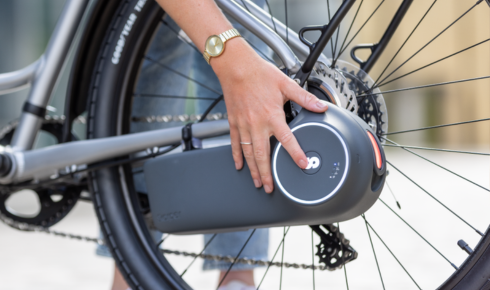
Related reading: SEO Services USA for Healthcare: Ranking Without Running Afoul of HIPAA or Google’s GuidelinesOne area that has seen tremendous growth in recent years is personal transportation technology. Students and hobbyists are increasingly exploring projects that involve an electric motor for bicycle applications. These motors offer a fascinating introduction to motion control, energy efficiency, and mechanical design. Even a basic demonstration model can help learners understand how electrical energy is converted into physical movement, which feels surprisingly rewarding when seen firsthand.
The educational value of hands-on projects extends far beyond engineering. Building something from scratch encourages patience, critical thinking, and problem-solving skills. When a project doesn’t behave as expected, learners naturally begin asking questions. Why isn’t the circuit working? Is the connection loose? Does the component require more power? That curiosity-driven process is often where the deepest learning happens.
Teachers have recognized this for years, which explains why educational kits continue to grow in popularity. A well-designed science electric kit can introduce students to electronics in a way that feels approachable rather than intimidating. Instead of being overwhelmed by technical jargon, learners can focus on experimenting, observing outcomes, and gradually building confidence through experience.
Related reading: How Privilege Escalation Attacks Threaten Your NetworkThere’s something refreshingly simple about learning by doing. Think about riding a bicycle. No matter how many books you read about balance, you don’t truly understand it until you’re actually riding. Electronics follows a similar pattern. Knowledge becomes more meaningful when it’s connected to real-world action.
As technology becomes increasingly integrated into everyday life, electronic literacy is also becoming more valuable. We interact with smart devices, sensors, wireless systems, and automated equipment constantly. Understanding even the basics of how these systems function can provide useful perspective, whether someone plans to pursue a technical career or not.
Educational projects have also become more creative than ever before. Modern learners aren’t limited to basic circuits and blinking lights. They can build automated systems, environmental sensors, miniature robots, and energy-efficient devices. Many of these projects start with a simple science kit electric package that includes beginner-friendly components and clear instructions. What begins as a classroom activity often develops into a long-term interest or even a career path.
Related reading: Proximity Sensor: An Essential Electronics ComponentAnother factor contributing to the popularity of electronics education is accessibility. Decades ago, obtaining components could be difficult and expensive. Today, learners have access to an enormous variety of parts at affordable prices. Whether someone is working on a school project or experimenting with a personal invention, finding the necessary materials has become much easier.
In fact, many hobbyists now prefer to buy electronic components online because it provides access to specialized parts that local stores may not carry. The convenience is hard to ignore. Within minutes, builders can compare specifications, read reviews, and order everything needed for a project. This availability has opened the door for countless people who might otherwise never have explored electronics.
One thing that often surprises newcomers is how quickly small projects can lead to bigger ambitions. A simple LED circuit turns into a sensor project. A sensor project becomes a robot. Before long, someone who started with curiosity is designing increasingly sophisticated systems. Progress tends to happen naturally because each success builds confidence for the next challenge.
Related reading: Top 10 Questions Answered About Blockchain’s Impact on IndustriesThe community surrounding electronics also deserves some credit. Online forums, video tutorials, maker groups, and educational platforms have created a welcoming environment for beginners. Questions are answered, ideas are shared, and inspiration is everywhere. It’s easier than ever to learn from people who have already solved similar problems.
At its heart, electronics is about exploration. It’s about asking “What happens if I try this?” and then discovering the answer firsthand. That spirit of experimentation is what keeps the field exciting, regardless of age or experience level.
As technology continues evolving, hands-on learning will remain one of the most effective ways to understand the world around us. Whether someone is assembling a simple educational kit or working on a more advanced invention, every project teaches something valuable. Sometimes the lesson is technical. Sometimes it’s about persistence. Either way, the experience tends to stay with you long after the project is finished.
Related reading: 20 Frequently Asked Questions about Building Your Custom PC AnsweredRelated Posts
Same section · next recordsTEC-0607 · 22 Apr 2026 · Technology

SEO Services USA for Healthcare: Ranking Without Running Afoul of HIPAA or Google’s Guidelines
Healthcare SEO in the United States is one of the most complex and highest-stakes…
TEC-0515 · 20 Feb 2026 · Technology

How Privilege Escalation Attacks Threaten Your Network
Getting into a network is only half the battle for an attacker. Initial access…
TEC-0448 · 01 Oct 2025 · Technology
Proximity Sensor: An Essential Electronics Component
In today’s fast-evolving world of technology, electronics components play a pivotal role in building…